


Why a Multi-Country eSIM Is Your Best Friend for Laos and Cambodia Travel
Remember those days of frantically searching for local SIM card vendors upon arrival, juggling tiny plastic cards, and hoping you picked the right data package? As a seasoned family travel planner who's hauled two kids through 30 countries (and countless airport layovers), I can tell you that those days are happily behind us, especially for a multi-country adventure like Laos and Cambodia. These vibrant Southeast Asian gems, while utterly captivating, aren't always paragons of streamlined connectivity. That's where a multi-country eSIM steps in as the unsung hero of family travel.
Think about it: you land in Luang Prabang, tired but excited, and the first thing you need is to order a Grab or check your hotel booking. Then, a week later, you're crossing into Cambodia, perhaps by bus to Siem Reap, and the last thing you want is a data blackout right when you're trying to navigate a new city with hungry kids in tow. A multi-country eSIM lets you activate your data plan before you even leave home, ensuring instant connectivity across both nations. No more hunting for obscure phone shops, no language barriers when trying to explain your data needs, and certainly no fumbling with those minuscule SIM ejector tools while a toddler attempts to scale your carry-on.
It's not just about convenience, though. For families, reliable data is paramount. It means offline maps (downloaded before you leave, of course, but updated on the fly), quick translations, and perhaps most crucially, keeping the peace with a bit of screen time during long transfers or restaurant waits. A single eSIM plan covering both Laos and Cambodia means your entire family's digital ecosystem, from your mapping apps to your kids' beloved Disney+ (yes, we plan for that too), remains uninterrupted. It removes a significant layer of travel stress, allowing you to focus on the temples of Angkor, the serene Mekong, and the joy of shared discovery (or, let's be honest, the strategic deployment of the iPad for five minutes of quiet).
The Pain Points of Traditional SIMs with Kids
I've been there: you buy a local SIM in Vientiane, it works great. Then you cross into Cambodia and suddenly you're back to square one. Or worse, you pay for an international roaming package from your home carrier that costs more than your flight. With traditional SIMs, especially when you have multiple devices beyond your own phone, the logistical nightmare is real. My kids, bless their hearts, each have an iPad for travel. Managing separate SIMs for those, alongside my phone and my partner's, would be a special kind of hell. Imagine trying to explain data top-ups in Khmer or Lao while wrangling two overtired children in a crowded market.
Furthermore, traditional SIMs often lack the flexibility needed for dynamic family travel. What if your itinerary shifts? What if you decide to extend your stay in one country? With a physical SIM, you're often locked into a plan or facing unexpected fees. An eSIM, especially a multi-country one, offers the agility modern families demand, allowing you to often top up data on the fly from an app, no matter where you are.
Seamless Transitions Between Laos and Cambodia
The beauty of a multi-country eSIM lies in its ability to offer continuous service as you move from, say, the tranquil temples of Luang Prabang to the bustling streets of Phnom Penh. There's no need to swap SIMs, no anxious waiting for a new signal to pick up. Your phone (and more importantly, your kids' devices if you've set up a hotspot) simply connects to the best available network in the new country. This is particularly crucial for border crossings, whether by air, land, or even riverboat. Imagine crossing the Don Sahong border from Laos into Cambodia on a local bus, and as soon as you connect to the new country's network, your Europe's Smartest eSIMs multi-country plan automatically switches. Pure bliss, no stress.
Planning Your Data Needs for the Whole Crew
This is where the seasoned parent planner really shines. It's not just about *my* phone needing data, it's about the collective digital ecosystem of the family. My rule of thumb: always overestimate, especially when kids are involved. A 5GB plan might sound generous for one person, but add two kids streaming Disney+ in the back of a minivan, and that vanishes faster than a scoop of coconut ice cream in the Phnom Penh heat.
When I'm planning a trip to places like Laos and Cambodia, where Wi-Fi can be spotty, I assume most of our daily data consumption will be through our eSIM. This means accounting for navigation (Google Maps is a lifesaver, even offline, but live traffic updates are better), translations (Google Translate is a constant companion), social media, emails, and critically, entertainment for the kids. My 8-year-old is obsessed with Minecraft YouTube videos, and my 12-year-old loves Roblox. Both are data hogs. So, how much data do you *really* need?
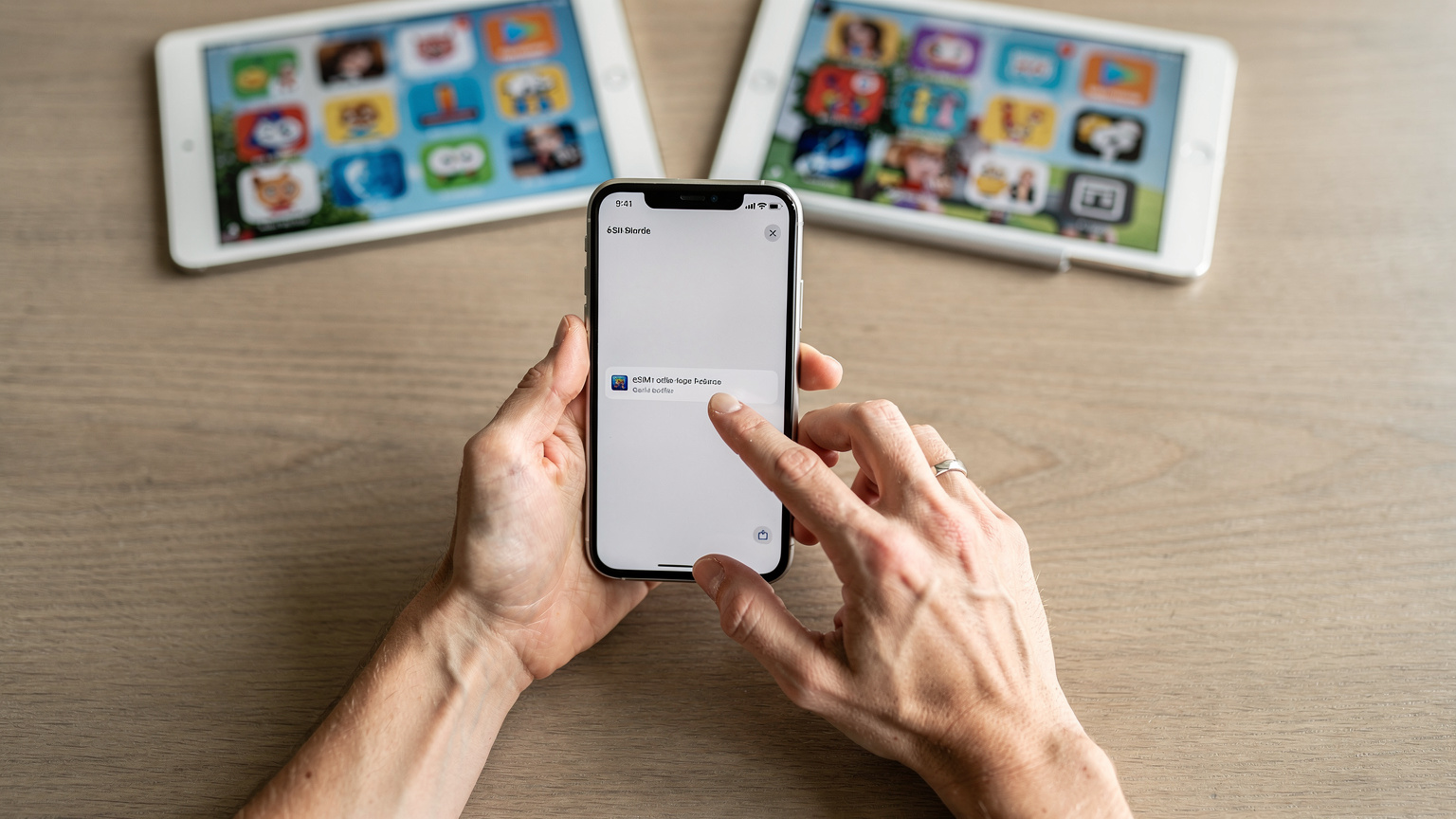
My best estimate for a family of four, with two kids frequently using devices for streaming and gaming, is a minimum of 30-50GB for a 10-14 day trip. This might sound like a lot, but trust me, it provides peace of mind. It covers those moments when the hotel Wi-Fi is down, or when you're on a long bus journey from Vang Vieng to Vientiane and need to keep the peace. Plus, remember that a good chunk of this will be hotspotting from your main device to the kids' tablets. Parental control features that work effectively over a shared eSIM connection are invaluable for managing screen time on the road, ensuring they aren't accidentally racking up extra charges or stumbling onto inappropriate content.
Data-Hungry Apps and How to Manage Them
We all know the usual suspects: streaming video (Netflix, Disney+, YouTube Kids), online gaming (Roblox, Fortnite), and even extensive social media use. Before any trip, especially to regions where data might be pricier or less stable, I have a ritual:
- Pre-load everything: Download movies, TV shows, audiobooks, and games onto kids' devices before we even leave home. Disney+ and Netflix allow for offline downloads, which is a lifesaver on planes and in areas with weak signal.
- Offline maps: Download entire regions in Google Maps. This way, even if data drops, you can still navigate.
- Set data limits: Most smartphones allow you to set data limits or warnings. Use them! For shared hotspots, monitor usage from your primary device.
- Wi-Fi first: Encourage kids to use hotel or restaurant Wi-Fi for heavy streaming, reserving eSIM data for essential navigation and quick check-ins.
For a realistic scenario, two kids streaming standard-definition Disney+ for 2 hours a day will consume roughly 2-3GB daily. Over a two-week trip, that's potentially 28-42GB just for streaming. Add in general browsing, social media, and your own usage, and that 50GB suddenly doesn't seem so extravagant. When I was researching for my trip through Bali Digital Nomad 2026, similar data considerations were key, albeit with less focus on kid streaming and more on remote work.
Estimating Data for Parental Control and Hotspotting
While the kids are busy watching 'Bluey,' you're still using your phone for crucial tasks. This includes checking booking confirmations, using ride-hailing apps like PassApp (popular in Cambodia) or Loca (Laos), keeping an eye on your home's security cameras, and of course, looking up opening times for the Royal Palace. If you're hotspotting for multiple devices, remember that all that data consumption comes from your primary eSIM plan. Some parental control apps, like Google Family Link or Apple's Screen Time, also require a consistent internet connection to enforce limits or share location data, which can be invaluable when exploring busy markets or temples.
I usually factor in an extra 10-15GB for my own usage and the overhead of parental controls and hotspot management. It's better to have too much data than to be rationing it out mid-trip, causing unnecessary stress. Especially when you're trying to find that specific gelato place in Vientiane that your kids have been promised all day.
Choosing the Right eSIM Provider for Laos and Cambodia
This is arguably the most critical step. Not all eSIM providers are created equal, especially when it comes to multi-country coverage in less-trodden paths like Laos and Cambodia. You need a provider that offers robust network partnerships, flexible data packages, and reliable customer support (because things occasionally go sideways, and a weary parent needs quick answers).
When I scout for the perfect eSIM, I look for several key factors:
- Coverage: Does it explicitly cover both Laos and Cambodia? What are the partner networks in each country (e.g., Lao Telecom, Unitel, Smart Axiata, Cellcard)?
- Data volume: Are there plans large enough for family use (30GB+)?
- Validity period: Does the plan last for the duration of your trip (e.g., 15 days, 30 days)?
- Top-up options: Can you easily add more data if you run out, ideally through an app?
- Pricing: Is it competitive compared to local SIMs (though the convenience often outweighs a slight price difference)?
For a multi-country Asian journey, I typically lean towards providers known for their extensive regional coverage. For instance, if you're planning a grand tour that might even include a stopover in Rio, Dubai, or Sydney, a truly global eSIM with broad regional packages can be even more beneficial.
| Provider Feature | EastESIM Multi-Country | Local SIM (Lao/Khmer) | Home Carrier Roaming |
|---|---|---|---|
| Ease of Setup | QR code/App, pre-trip activation | Physical purchase, registration in-country | Automatic, but often requires activation |
| Coverage (Laos & Cambodia) | Excellent, partners with major networks | Good in respective country, none in other | Dependent on roaming agreements, often limited |
| Cost for Family Data (30-50GB) | Very competitive, transparent pricing | Potentially cheaper per GB, but two separate purchases | Extremely expensive, often USD 10-20/day |
| Flexibility / Top-ups | Easy in-app top-ups, varied plans | Requires local currency, specific vendors | Limited, often fixed packages |
| Parental Control Compatibility | Seamless, works with phone's native features | Same as above | Same as above |
| Multi-Device Hotspot | Supported, reliable connection | Supported | Supported, but cost prohibitive |
Network Partnerships and Coverage Quality
In Laos, you'll primarily encounter Lao Telecom, Unitel, and ETL. In Cambodia, Smart Axiata, Cellcard, and Metfone are the big players. A good multi-country eSIM will have roaming agreements with at least two of the strongest networks in each country to ensure optimal coverage, even in more rural areas. This is vital when you're exploring the ancient ruins of Wat Phou in Laos or the remote temples of Koh Ker in Cambodia, where signal can be patchier. You definitely don't want to be caught without a signal when your kids suddenly need to use the bathroom and you can't translate "toilet" to the nearest vendor.
Before committing, I always do a quick search for recent user reviews regarding specific providers' coverage in these regions. Forums and travel blogs are goldmines for this kind of real-world feedback. It’s important to remember that even the best networks can have dead zones, but having multiple partner networks increases your chances of consistent connectivity.
Data Packages and Pricing for Families
For family travel, I almost exclusively look at larger data packages, typically 30GB or more, with validity periods matching or exceeding our trip duration (e.g., 30-day validity for a 14-day trip). This gives us a buffer. When comparing prices, don't just look at the cost per GB. Consider the overall value: the convenience, the reliability across borders, and the ease of top-up. Sometimes, paying a few extra dollars for an eSIM that handles everything seamlessly is worth its weight in gold, especially when you're managing multiple little humans.
For instance, a 30GB plan for 30 days covering both countries might cost around $30-40. Compare this to buying two separate local SIMs (which could run you $10-15 each for similar data) plus the hassle, or a home carrier roaming plan that could be $100-200. The multi-country eSIM almost always wins on convenience and often on cost too, particularly for my specific data needs with two streaming kids.
Activating Your eSIM: The Smooth Parent's Guide
The beauty of an eSIM is its simplicity, but a little pre-trip preparation goes a long way. I usually activate our family's eSIMs a day or two before departure. This way, if there are any issues, I have reliable home Wi-Fi and time to sort them out without the added pressure of airport chaos or jet lag.
Step-by-Step Installation Before You Fly
- Purchase your eSIM: Visit the EastESIM Laos page or the multi-country Asia page and select a plan that covers both Laos and Cambodia with ample data (remember that 30-50GB family estimate!).
- Receive your QR code/details: The provider will email you a QR code or manual activation details.
- Install on your device: Go to your phone's Settings > Cellular/Mobile Data > Add eSIM. Scan the QR code. Follow the prompts. Name your new eSIM plan something clear, like "LaosCambodia 2026."
- Keep your home SIM active for calls (optional): Most phones allow you to use your home SIM for calls/texts and your eSIM for data. Set your eSIM as the primary for mobile data.
- Repeat for other family devices (if applicable): If you have secondary devices that are eSIM-compatible (some newer iPads are), consider getting separate data-only eSIMs for them, or plan to hotspot from your main phone.
It's genuinely a 2-minute process per device. And if you’re concerned about any activation issues, you can always check the EastESIM FAQ section, which has a wealth of information for smooth setup.
Pre-Trip Checks for Peace of Mind
- Confirm eSIM status: After installation, ensure the eSIM profile shows as active in your phone's settings. It might not connect to a network until you're in the destination country, but the profile should be there.
- Update apps: Make sure all essential apps (maps, banking, communication) are updated to their latest versions.
- Download content: As mentioned, download movies, shows, and games for offline viewing on all kids' devices.
- Parental control settings: Double-check all parental controls on kids' devices, ensuring screen time limits and content restrictions are in place. These settings will continue to function whether they're on Wi-Fi or your eSIM hotspot.
Border-Crossing Connectivity: From Luang Prabang to Siem Reap
This is where the multi-country eSIM truly shines. Unlike a physical SIM, which would require you to purchase a new one at each border, your eSIM seamlessly transitions between networks. Whether you're flying from Vientiane to Phnom Penh or taking a bus from Pakse to Stung Treng, your data connection should remain uninterrupted (barring actual dead zones, of course).
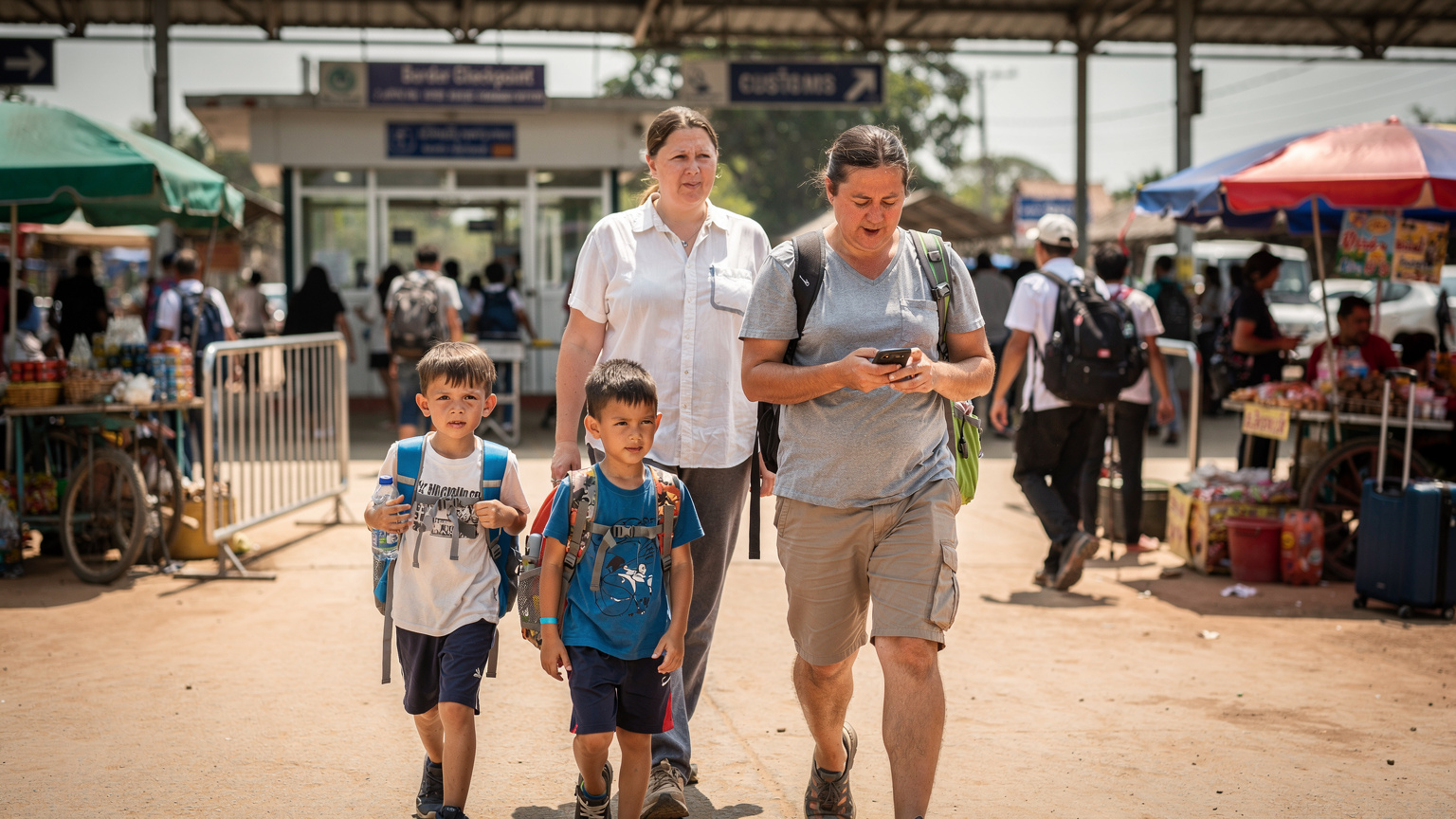
The key is that your eSIM connects to the strongest available partner network in whichever country you're currently in. So, as you cross from Laos into Cambodia, your phone will automatically switch from a Lao network (like Lao Telecom) to a Cambodian one (like Smart Axiata). This is a stark contrast to the old days where you'd have to scramble for a new SIM card vendor immediately after immigration, often at inflated prices at border kiosks.
What to Expect at Land Borders and Airports
At international airports like Wattay International in Vientiane or Siem Reap International, you'll find good cellular coverage. Your eSIM should connect almost instantly upon landing. For land borders, such as the Veun Kham – Dom Kralor crossing, the signal might be a bit weaker right at the border post itself, but it should pick up quickly once you're a few kilometers into the new country.
I've crossed many borders in Asia with kids. The fewer things you have to worry about at a busy immigration checkpoint, the better. Not having to deal with a new SIM card is a huge advantage. It allows you to keep an eye on your children, manage luggage, and complete immigration formalities without the added stress of connectivity. It’s like having a silent travel assistant, always ensuring you’re connected just when you need it most. This kind of seamlessness is essential when you're navigating complex transit, similar to how a well-chosen eSIM simplifies travel through Global Business Connectivity scenarios.
Maintaining Parental Controls Across Networks
A big win for parents: your device's native parental control features (Apple's Screen Time, Google Family Link) or third-party apps will continue to function seamlessly regardless of which network your eSIM is connected to. These controls are tied to the device's operating system or the app itself, not the underlying carrier. So, if you've set a 2-hour limit on YouTube Kids, that limit will hold whether you're on Lao Telecom or Smart Axiata. This means no surprise binge-watching sessions after a long day of sightseeing, a small but significant victory for parental sanity.
Keeping the Kids Occupied and Connected on the Go
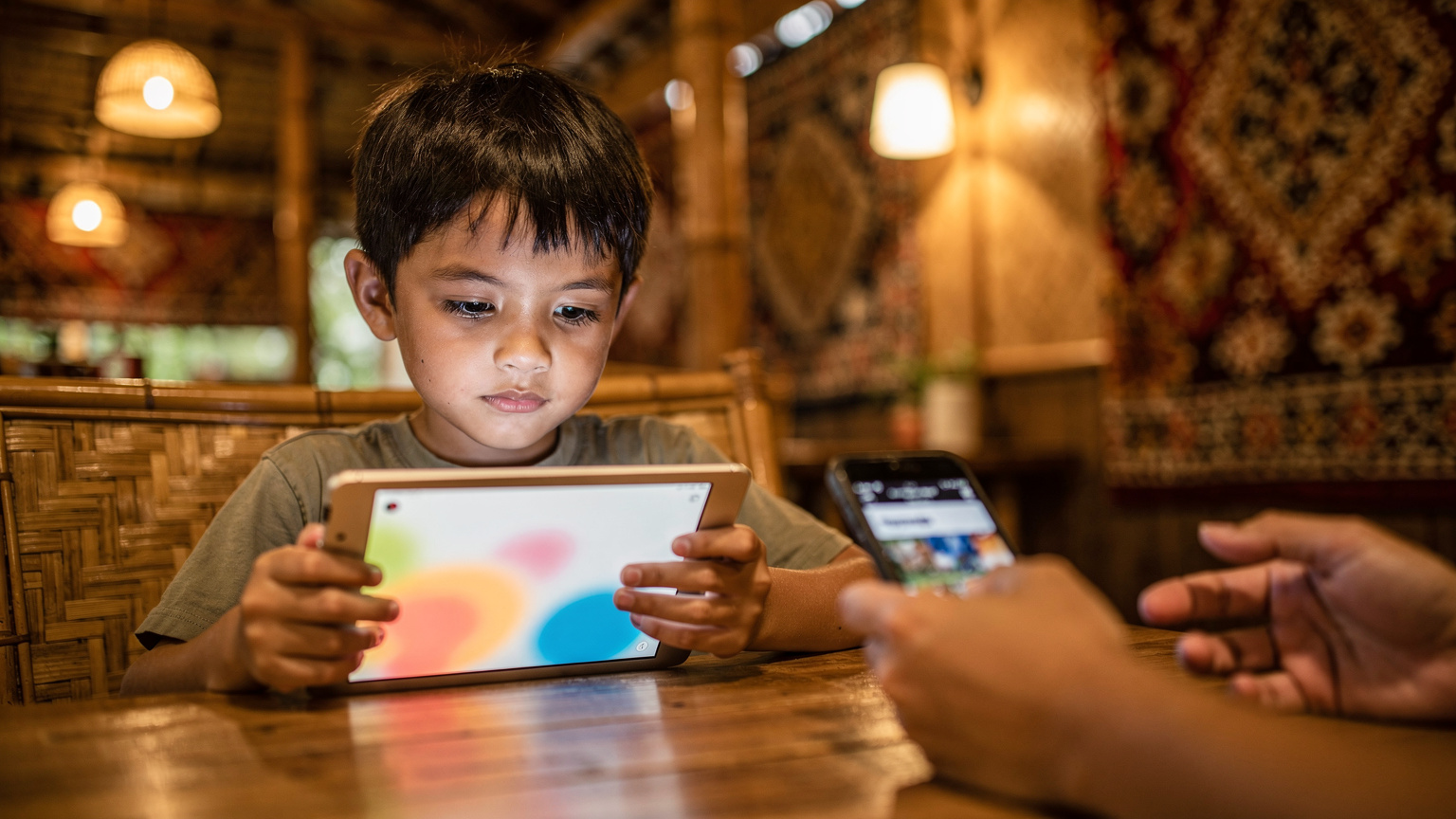
Let's be real, a happy kid on a trip often means a connected kid, at least for part of the journey. Whether it's a long bus ride, a flight delay, or simply downtime at a restaurant, devices are part of our travel toolkit. Ensuring they stay connected, even when you're in the middle of nowhere, is where the eSIM earns its stripes.
Hotspotting to Multiple Devices
My primary phone (an iPhone 14 Pro, for reference) serves as the family's mobile hotspot when we're out and about. With a robust data plan on my eSIM, I can easily share the connection with my kids' iPads and even my partner's phone. Most modern smartphones handle hotspotting without a hitch, allowing 5-10 devices to connect simultaneously. This means both kids can be streaming, and my partner can check emails, all from my single eSIM data plan. It's incredibly efficient.
However, be mindful of battery drain on your hotspot device. Carrying a portable power bank is non-negotiable for family travel, especially when you're relying on your phone for navigation, photos, and keeping the digital peace. A 20,000 mAh power bank can usually recharge a smartphone 3-4 times, which is more than enough for a full day of heavy use.
Connectivity Inside Theme Parks and Cruise Ships
While Laos and Cambodia aren't known for sprawling theme parks in the vein of Disney World, they do have attractions that can benefit from connectivity, such as water parks or large cultural complexes. Similarly, if your itinerary includes a Mekong River cruise (a popular option), understanding connectivity is key. On a cruise, you'll often have a mix: decent signal when near river towns or major cities, and patchy or non-existent signal when in more remote stretches. A multi-country eSIM will attempt to connect to the strongest available land-based network. However, for true cruise ship connectivity in open waters, you might need to purchase the ship's satellite Wi-Fi package, as eSIMs rely on terrestrial networks. (Though for river cruises, you'll be mostly within range.)
For places like Phnom Penh's Garden City Water Park or even the vast Angkor Archaeological Park, having reliable data ensures you can: locate family members if separated (using Find My or Google Maps location sharing), look up information about specific temples, or order a ride-share when you're ready to leave. I've found that even in bustling places, having that instant data connection for my kids' devices (even for just a quick game of 'Among Us') can be the difference between a meltdown and a smooth transition to the next activity.
Balancing Screen Time with Real-World Exploration
As a parent, I'm always looking for that sweet spot between leveraging technology for convenience and ensuring my kids are fully immersed in the travel experience. Our eSIM data plans are part of this balance. They enable us to use educational apps like Duolingo (for a few Lao or Khmer phrases) or history apps about Angkor Wat, enriching their understanding of the places we visit. But they also facilitate necessary downtime.
My strategy is usually: devices for travel days, long transfers, and during meals if needed for quiet. When we're actively exploring a temple, market, or engaging in an activity like a cooking class, devices are typically put away (or used only for photos). The beauty of a flexible eSIM is that you have the data when you need it, but you're not obligated to use it constantly. It's about empowerment, not addiction.
Troubleshooting Common eSIM Hiccups Abroad
Even with the best planning, sometimes technology throws a curveball. It's rare, but knowing how to quickly troubleshoot common eSIM issues can save you a lot of headache, especially when you're in a foreign country and perhaps a bit sleep-deprived.
No Signal or Slow Data: What to Check
If your eSIM isn't connecting or data is painfully slow, here's my quick checklist:
- Restart your phone: The classic IT solution, but it often works wonders. A fresh connection can clear up many issues.
- Check APN settings: While most eSIMs configure this automatically, sometimes a manual check is needed. Your eSIM provider's instructions should detail the correct APN settings. You can usually find these under Settings > Cellular/Mobile Data > (Your eSIM Profile) > Mobile Data Network.
- Toggle Airplane Mode: Turn Airplane Mode on for 30 seconds, then off. This forces your phone to re-scan for networks.
- Manually select network: In your phone's cellular settings, you can often manually select a network instead of letting it auto-select. Try switching to a different partner network in the area (e.g., if you're on Smart Axiata, try Cellcard, if available).
- Check data roaming: Ensure data roaming is enabled for your eSIM profile. This is crucial as eSIMs operate on roaming agreements.
- Contact support: If all else fails, reach out to your eSIM provider's customer support. Many offer 24/7 chat support, which is invaluable when you're in a different time zone.
When to Top Up and How
Running low on data is a common concern, but with eSIMs, it's usually a simple fix. Most providers have an intuitive app or a web portal where you can easily monitor your data usage and purchase top-ups. I usually set a reminder to check our data usage every few days, especially if the kids have been particularly active streamers.
I aim to top up when we hit about 20% remaining data. This gives me a buffer in case of any payment processing delays or if we're in an area with weak Wi-Fi (which you'll need to purchase the top-up). The process is usually: open the app/website, select a new data package, pay, and the data is added to your existing eSIM profile within minutes. No need for physical vouchers or finding a specific store.
Beyond the Basics: eSIM Features for the Savvy Family Traveller
An eSIM is more than just a data pipe, especially for families. Modern eSIM services offer additional features that can significantly enhance your travel experience and provide that extra layer of parental control and convenience.
Parental Control Integration with eSIMs
While the eSIM itself doesn't have inherent parental control features, its seamless data connection is what enables your device's built-in controls to work effectively. Apple's Screen Time and Google Family Link rely on a constant internet connection to synchronize settings, apply limits, and share location data. With a reliable eSIM, you can:
- Set precise screen time limits: No more arguments about too much YouTube, even when away from Wi-Fi.
- Content restrictions: Ensure kids aren't accessing inappropriate websites or apps.
- App approvals: Require permission before kids can download new apps, preventing unexpected data consumption or in-app purchases.
- Location sharing: Keep track of older children if they're exploring a designated area independently, which is particularly reassuring in bustling markets or large temple complexes.
These features, when powered by consistent eSIM data, become truly powerful tools for responsible digital parenting on the go. It’s the difference between hoping for the best and actively managing their digital access, a crucial distinction for a parent who plans for everything (including teenage eye-rolls).
Pro-Parent TipAlways make sure your phone's operating system (iOS or Android) is up-to-date before your trip. Major updates can sometimes include enhancements to eSIM management and parental control features, ensuring everything runs as smoothly as possible. A glitchy phone is the last thing you need when trying to find an emergency snack in a foreign country!
Voice Calls and Messaging with an eSIM
Most multi-country eSIMs are data-only. This means they provide internet access but not a traditional phone number for calls and SMS. For families, this isn't usually an issue in 2026. We rely heavily on Wi-Fi calling (enabled through your home carrier) and internet-based messaging apps. Here's how we manage:
- WhatsApp/Viber: These are widely used in Laos and Cambodia for local communication. With your eSIM data, you can call and message anyone using these apps.
- FaceTime/Google Meet: For video calls back home, these work seamlessly over eSIM data.
- Your home number for emergencies: Keep your physical home SIM active (if your phone supports dual SIM, which most do now) and use it for emergency calls or essential SMS verification codes. Ensure you disable data roaming for your home SIM to avoid exorbitant charges.
For me, the priority is always reliable data. Voice calls are secondary and easily handled by apps. I’d rather have rock-solid Google Maps and Disney+ than an expensive local phone number I barely use.
Making the Most of Your Laos & Cambodia Adventure
Traveling with children through Laos and Cambodia is an unforgettable experience, full of ancient wonders, vibrant cultures, and delicious food. It also comes with its unique set of logistical challenges. By thoughtfully integrating a multi-country eSIM into your travel plan, you're not just buying data, you're investing in peace of mind, seamless transitions, and the ability to keep everyone connected and entertained, even when the Wi-Fi is a distant dream.
From navigating the night markets of Luang Prabang to exploring the grandeur of Angkor Wat, having reliable connectivity means less stress for you and more enjoyment for the whole family. It means quick translations when ordering street food (don't miss the khao soi in Laos or the amok in Cambodia!), instant access to information about historical sites, and crucially, a reliable lifeline for those inevitable moments when the kids need a digital diversion.
So, as you finalize your 2026 itinerary for these incredible destinations, remember to prioritize your connectivity. A good multi-country eSIM isn't just a convenience, it's an essential tool for creating a smoother, more enjoyable, and truly connected family adventure. Happy travels!
Frequently Asked Questions
How much data do I really need for a family trip to Laos and Cambodia?
For a family of four, with two children frequently using devices for streaming and online games, I recommend a minimum of 30-50GB for a 10-14 day trip. This accounts for navigation, translations, social media, and significant streaming/gaming for the kids, especially if you're hotspotting multiple devices.
Will my parental control apps still work with an eSIM?
Yes, absolutely. Parental control features like Apple's Screen Time or Google Family Link are tied to your device's operating system and apps, not the specific carrier. As long as your eSIM provides a consistent internet connection, these controls will function seamlessly, allowing you to manage screen time and content restrictions.
Is it easy to top up an eSIM if we run out of data in Laos or Cambodia?
Yes, topping up an eSIM is generally very straightforward. Most reputable eSIM providers offer an intuitive app or a web portal where you can easily monitor your data usage and purchase additional data packages. The new data is usually added to your profile within minutes, without needing to find a physical store.
Can I use my eSIM on a river cruise along the Mekong?
On a Mekong River cruise, your multi-country eSIM will connect to land-based cellular networks whenever available, especially when near towns or cities. In more remote stretches of the river, signal might be patchy or non-existent, requiring you to rely on the ship's satellite Wi-Fi if offered, or simply enjoy the digital detox.
What's the main advantage of a multi-country eSIM over buying local SIMs for Laos and Cambodia?
The primary advantage is seamless, uninterrupted connectivity across both countries without the hassle of purchasing, registering, and swapping physical SIM cards at each border. It saves time and stress, ensures consistent data for navigation and family entertainment, and often offers better value for larger data packages suitable for multiple users.
How does an eSIM handle connectivity inside theme parks or large attractions?
Within large attractions like Angkor Archaeological Park or water parks, an eSIM will connect to the strongest available local partner network, just like it would elsewhere in the country. This ensures you have data for mapping, communication if separated from family members, or to access online information about the site.

